
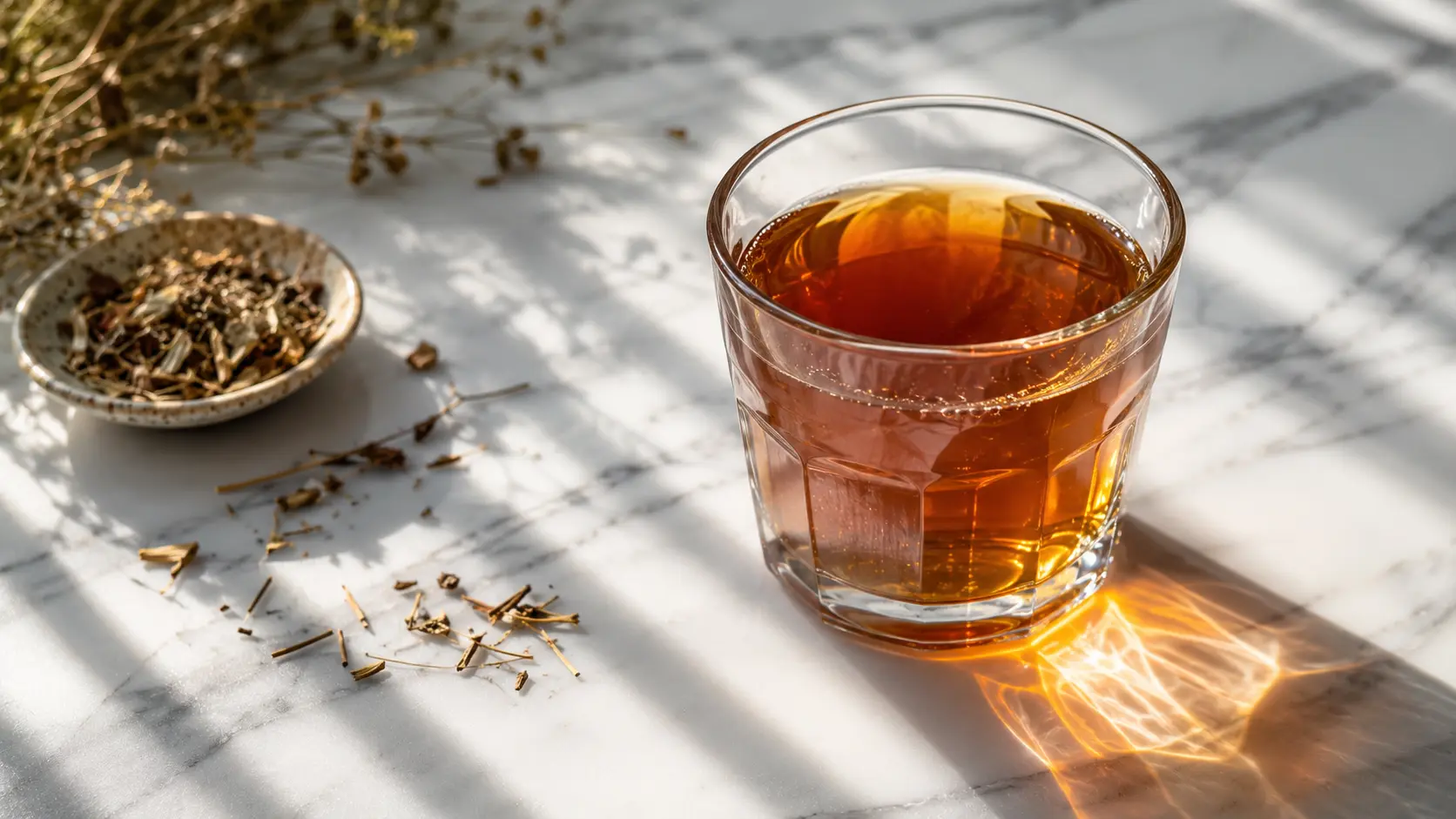
Essiac tea recipe begins with four humble herbs, a covered pot, and enough patience to let the brew steep overnight. The first time I made it outside Asheville, rain tapped the kitchen window while burdock root darkened the water into a deep amber tea. It felt less like a trend and more like an old kitchen ritual, the kind of quiet recipe people pass along with stories attached.
In this guide, you’ll learn what goes into an Essiac tea recipe, how to measure the herbs, how long the tea takes, how to store it, and which variants taste gentler for beginners. This article shares a culinary herbal preparation, not medical advice. Because strong herbs can affect people in different ways, talk with a qualified clinician before drinking Essiac tea if you take medication, feel unwell, or manage a health condition.
One laboratory-based study found that an Essiac tea preparation helped neutralize reactive oxygen species and reduce lipid oxidation, suggesting antioxidant activity linked to the plant compounds naturally present in herbal infusions. [Source]
The Story Behind This Essiac Tea Recipe
A Blue Ridge Kitchen Memory
My name is Harper Ava, and I live just outside Asheville, North Carolina, where the Blue Ridge mornings often smell like wet leaves, woodsmoke, and coffee. I grew up in a small Midwestern town where food carried memory. Nobody called it heritage cooking back then. We just knew that a simmering pot meant someone cared enough to stay nearby and taste as they went. That same feeling led me to this Essiac tea recipe.
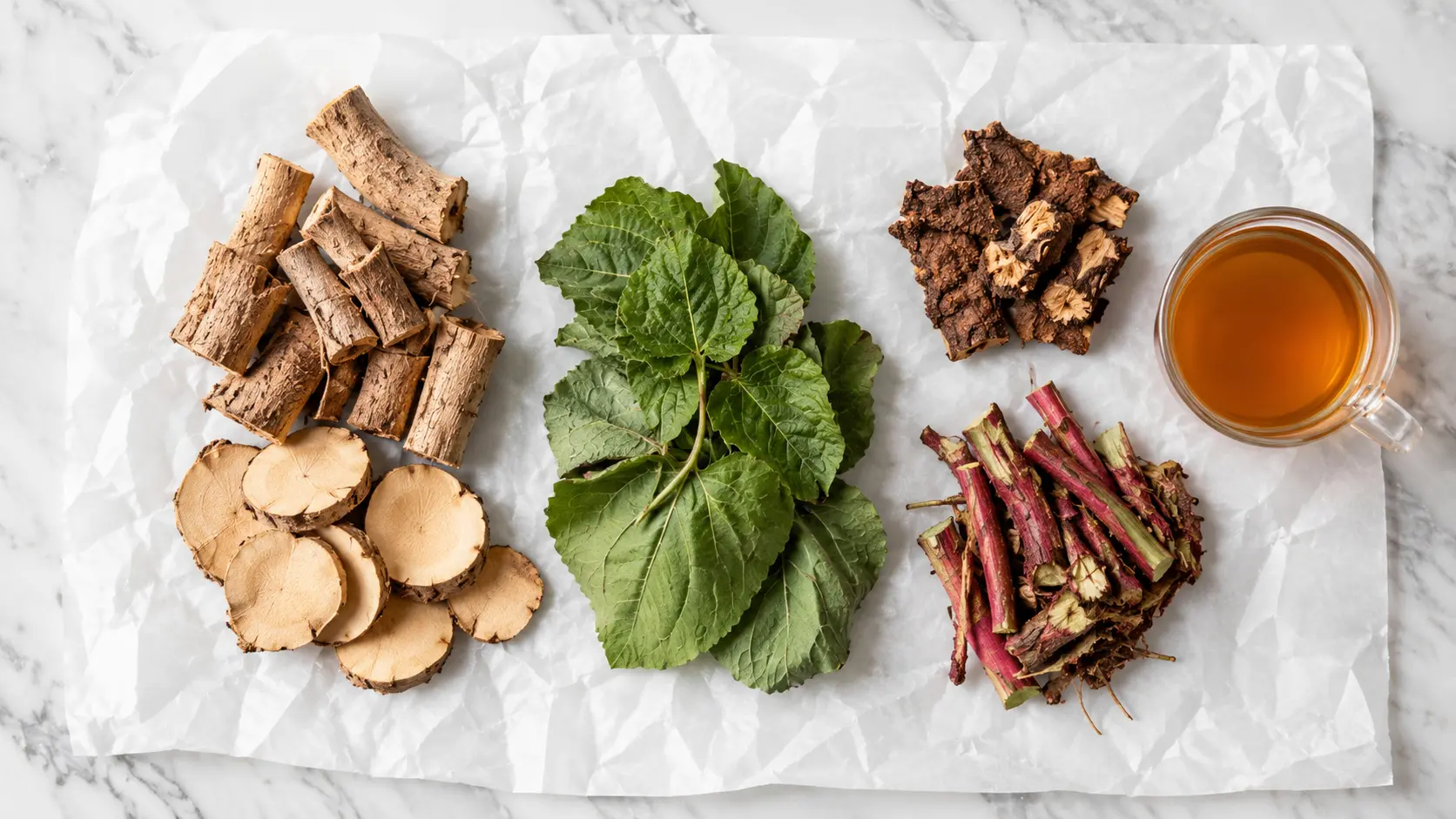
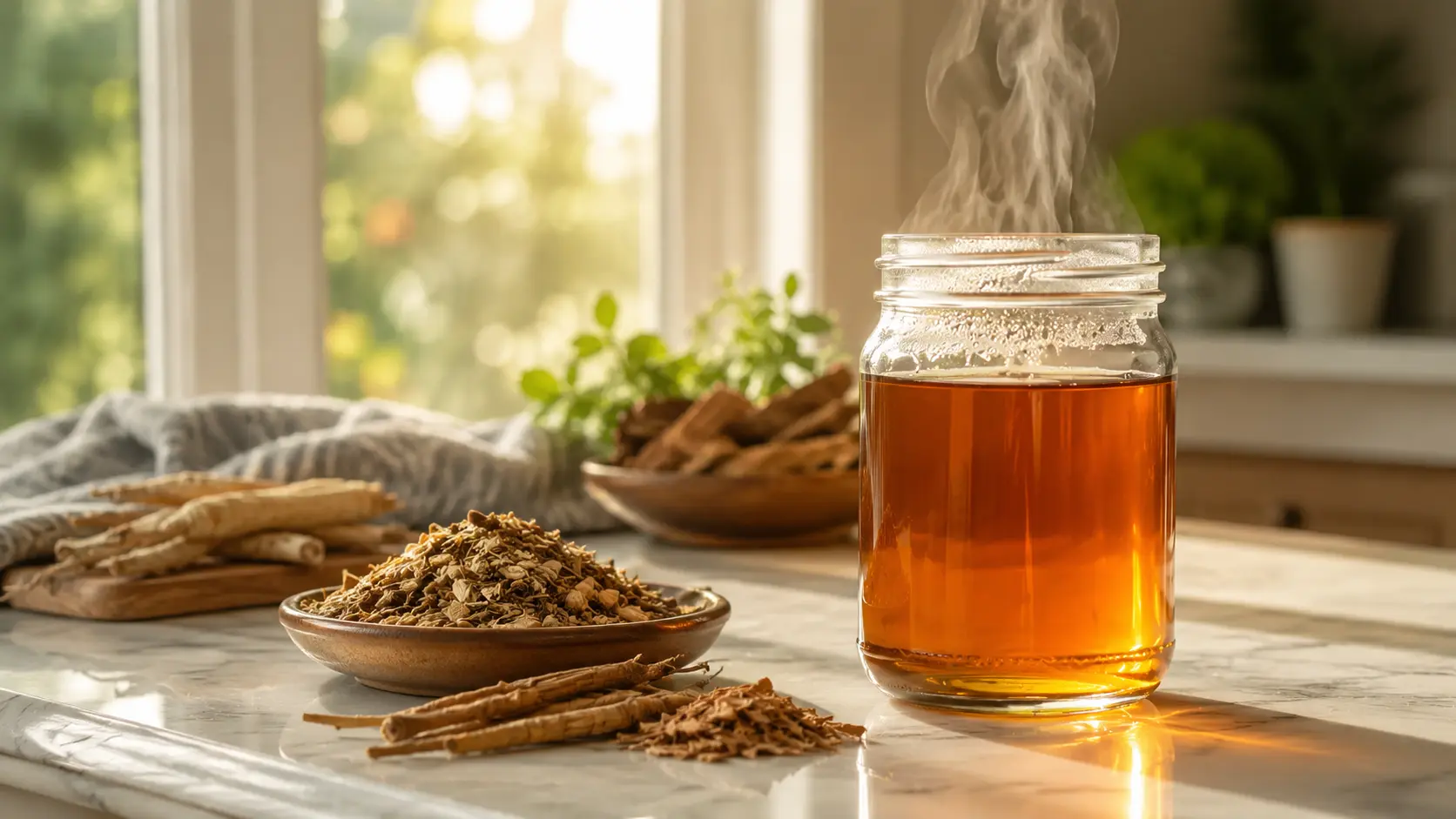
I didn’t learn cooking in culinary school. I learned it in diners, bistros, back rooms, and supper clubs where cooks trusted their senses. Therefore, when I first measured burdock root, sheep sorrel, slippery elm bark, and turkey rhubarb, I treated the herbs like ingredients, not magic. The burdock smelled earthy and sweet. The sheep sorrel smelled green and tart. The slippery elm gave the blend a soft body, while the turkey rhubarb brought a sharper edge.
This Essiac tea recipe asks for patience more than skill. First, you simmer the herbs briefly. Then, you let them rest under a lid for hours. Finally, you strain the tea into clean glass jars. The method feels slow, yet it makes sense. Roots and barks need time to give up flavor. Leaves need gentle heat. As a result, the final tea tastes deep, earthy, and slightly tangy.
If you enjoy cozy, slow-sipped drinks, you may also like my site’s chai tea concentrate because it follows the same idea: simple ingredients, careful heat, and a big payoff in the cup.
Why This Herbal Brew Still Feels Special
Essiac tea carries plenty of history, but home cooks should treat it with clear eyes. Many people connect the blend with Canadian nurse René Caisse, who made the four-herb tea widely known in the 20th century. However, stories and tradition do not replace medical care. So, I approach this Essiac tea recipe as a strong herbal infusion with a meaningful past and a memorable flavor.
The tea tastes best when you keep the process simple. Good herbs matter. Clean water matters. Low heat matters. Most of all, timing matters. A rushed Essiac tea recipe can taste harsh and muddy. A careful one tastes smoother, cleaner, and more balanced.
Essiac Tea Recipe

Ingredients
- 1 ounce coarse dried burdock root
- 3/4 ounce dried sheep sorrel
- 1/4 ounce slippery elm inner bark
- 1/16 ounce turkey rhubarb root
- 4 cups filtered water
- Optional for serving: lemon slice mint, honey, or fresh ginger
Instructions
- Measure the herbs carefully and keep the grind coarse.
- Bring 4 cups of filtered water to a boil in a stainless steel pot.
- Add the herbs, cover the pot, lower the heat, and simmer for 10 minutes.
- Turn off the heat and let the covered pot steep for 8 to 12 hours.
- Warm the tea until it steams, but do not boil it again.
- Strain through fine cloth into sterilized glass jars.
- Chill the jars and store them in the refrigerator for up to 2 weeks.
- Serve warm or cold in small portions.
Notes
Calories: 2
Sugar: 0 g
Sodium: 1 mg
Fat: 0 g
Saturated Fat: 0 g
Unsaturated Fat: 0 g
Trans Fat: 0 g
Cholesterol: 0 mg
Carbohydrates: 0 g
Fiber: 0 g
Protein: 0 g
Essiac Tea Recipe Ingredients and Ratios
The Classic Four-Herb Blend
This small-batch Essiac tea recipe makes about 4 cups before straining loss. It suits beginners because you can test the flavor without making a huge batch.
| Ingredient | Amount | Role in Flavor |
|---|---|---|
| Coarse dried burdock root | 1 ounce | Earthy base with mild sweetness |
| Dried sheep sorrel | 3/4 ounce | Green tang and herbal lift |
| Slippery elm inner bark | 1/4 ounce | Soft, silky body |
| Turkey rhubarb root | 1/16 ounce | Sharp balance; use a small amount |
| Filtered water | 4 cups | Clean extraction and better taste |
For a genuine essiac tea recipe, many cooks stay close to the four-herb blend and avoid sweeteners during brewing. Add honey or lemon only when serving, not while the tea steeps.
Substitutions, Safety Notes, and Herb Quality
Buy herbs from a trusted culinary or herbal supplier. Choose coarse-cut herbs because powder can make the tea cloudy and gritty. Also, smell each herb before you start. Fresh burdock smells earthy, not dusty. Sheep sorrel smells green, not stale. Slippery elm should smell mild and woody. Turkey rhubarb smells stronger, so measure it with care.
You can make small changes for flavor, but you should not guess with strong herbs. For example, fresh ginger can warm the finished cup, and lemon can brighten the taste. However, no common pantry swap truly copies sheep sorrel or turkey rhubarb. If you miss one of the four herbs, wait until you can source it.
If you like rustic herbal drinks with a softer taste, you may enjoy Pulhia tea as a lighter companion recipe for days when Essiac tastes too strong.
How to Make Essiac Tea Recipe at Home
Simmer, Steep, Strain, and Bottle
Start this Essiac tea recipe with a stainless steel pot, a tight lid, a fine strainer or clean cloth, and sterilized glass jars. Avoid aluminum cookware because strong herbal brews can pick up unwanted flavors.
First, add 4 cups of filtered water to the pot and bring it to a boil. Next, stir in the measured herb blend. Lower the heat right away, cover the pot, and simmer for 10 minutes. The tea should darken slowly. It should not rage, splash, or reduce too much.
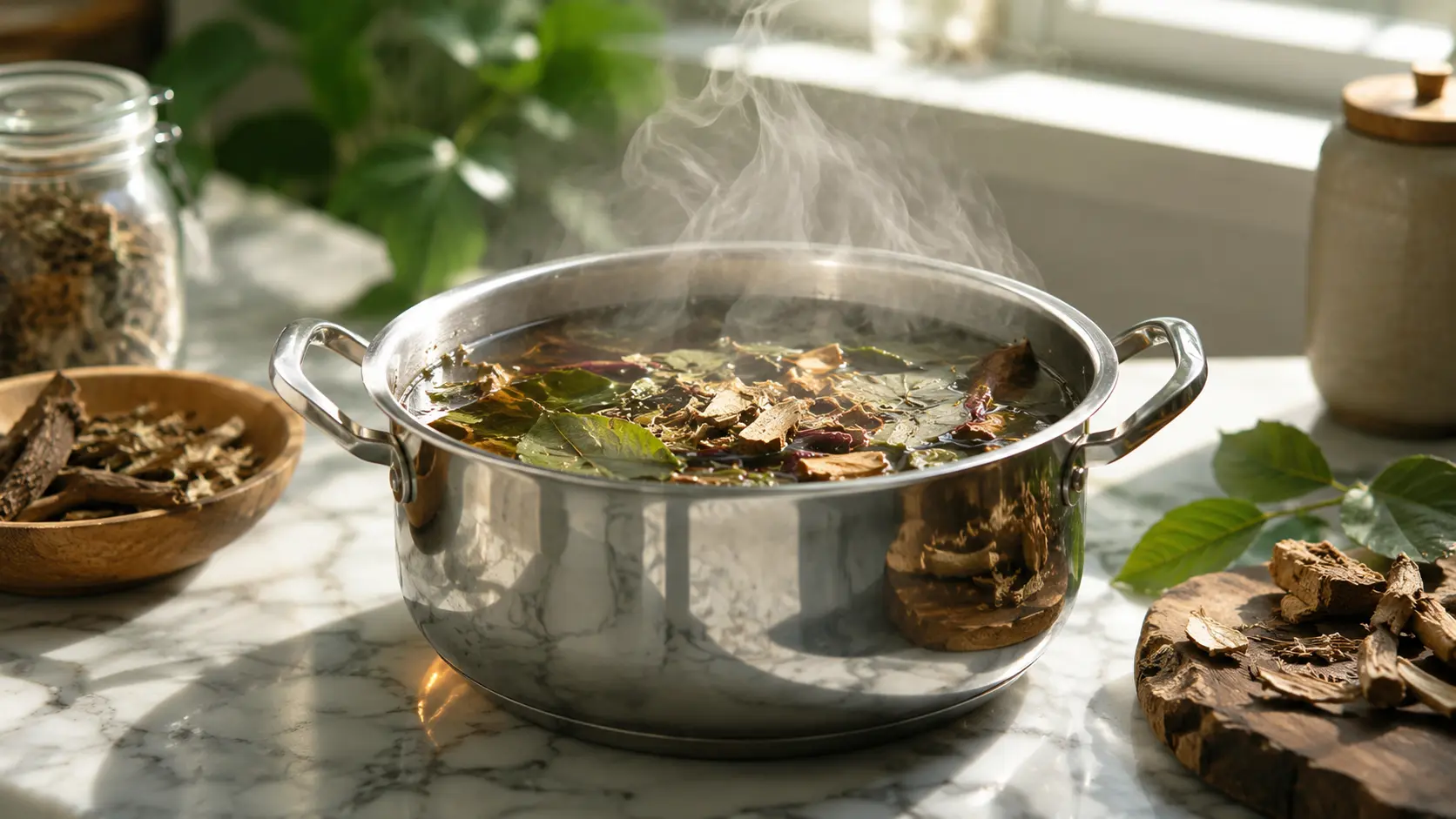
After 10 minutes, turn off the heat and keep the lid on. Let the pot sit at room temperature for 8 to 12 hours. Most people steep it overnight because the timing fits normal kitchen life. In the morning, warm the tea until it steams. Do not boil it again. Then, strain it through fine cloth into clean glass jars.
A careful Essiac tea recipe gives you a translucent brown tea with an earthy scent. If it smells burnt, you used too much heat. If it tastes thin, your herbs may need a longer steep next time. If it tastes harsh, shorten the steep or use a little more water.
For a bright serving idea, pair a warm cup with a small glass of citrus juice on the side instead of adding too much citrus directly to the brew.
Flavor Checkpoints for a Smooth Brew
A smooth Essiac tea recipe depends on three checkpoints: color, scent, and texture. The color should look amber-brown, not black. The scent should feel earthy and herbal, not sour. The texture should taste light, not gritty.
Do not squeeze the strained herbs too hard. That can push bitter sediment into the tea. Instead, let gravity do most of the work. Also, keep the jars closed in the refrigerator and pour only what you need. This habit keeps the batch fresher.
The phrase essiac tea recipe original often points to the four-herb version, but home cooks still vary the ratio, source, and batch size. Because of that, write down your herb source, steep time, and water amount each time you brew. Then, you can repeat the cup you liked most.
Essiac Tea Recipe Variations, Storage, and Serving
Classic, 8-Herb, Ginger, and Cold Versions
The classic Essiac tea recipe uses burdock root, sheep sorrel, slippery elm, and turkey rhubarb. This version tastes earthy, deep, and slightly tart. Many beginners like it warm because heat softens the edges.
An 8-herb version usually adds herbs such as blessed thistle, red clover, kelp, or watercress, depending on the source. It tastes more botanical and sometimes sharper. Choose it only when you already enjoy strong herbal drinks.
A ginger Essiac tea recipe adds fresh ginger after straining. Add one thin slice to a warm mug, steep for 3 minutes, and remove it before sipping. A cold version works well in summer. Chill the finished tea for 6 hours, pour it over ice, and add a lemon wheel or mint sprig.
If you enjoy cold, pretty drinks, the site’s coconut and pineapple mocktail offers a sweeter contrast for guests who prefer fruit-forward sips.
How to Store and Serve It
Store Essiac tea in sterilized glass jars in the refrigerator for up to 2 weeks. Label each jar with the brew date. Keep the lid tight, and discard the tea if it smells sour, grows mold, or changes texture.
Do not freeze it. Freezing can dull the aroma and change the mouthfeel. When you want a warm serving, pour a small amount into a saucepan and warm it over low heat until it steams. You can also warm it in a mug with hot water nearby, but avoid hard boiling.
Most people serve this Essiac tea recipe in small portions because the flavor tastes concentrated. Start with a few tablespoons or a small cup if you have never tried it. Again, this article treats the tea as a traditional herbal drink, not a treatment.

For readers who like simple wellness-style drinks, natural Mounjaro recipe may fit the same kitchen habit of mixing easy drinks at home.
FAQ
What is Essiac tea recipe?
Essiac tea recipe means a traditional four-herb tea made with burdock root, sheep sorrel, slippery elm inner bark, and turkey rhubarb root. People simmer the herbs, steep them for several hours, strain the liquid, and store it cold. Many stories connect Essiac tea with Canadian nurse René Caisse, but this recipe does not make medical claims. Treat it as a strong herbal infusion with earthy flavor and a long history.
How to make Essiac tea recipe?
To make Essiac tea recipe, boil 4 cups of filtered water, add the measured herbs, cover the pot, and simmer for 10 minutes. Then turn off the heat and let the covered pot steep for 8 to 12 hours. Warm the tea until steaming, strain it through fine cloth, and pour it into sterilized glass jars. Store the jars in the refrigerator.
How much time does it take?
This Essiac tea recipe takes about 10 minutes to prep, 10 minutes to simmer, 8 to 12 hours to steep, and about 10 minutes to warm, strain, and bottle. Plan for 9 to 13 hours total, with most of that time spent resting overnight.
What are the variants?
Common variants include the classic 4-herb blend, an 8-herb version, a ginger version, a mild beginner version with more water, and a cold tea version served over ice with lemon or mint.
Harper Ava Story Version About Essiac tea recipe
I’m Harper Ava, 42, writing from just outside Asheville, where the Blue Ridge hills keep teaching me patience. This Essiac tea recipe reminds me of the Midwestern kitchens I grew up in, where food meant comfort, not fuss. I learned to cook in diners and bistros, not culinary school, so I trust my hands, my nose, and the quiet clues in a pot. For this tea, burdock root gives earthiness, sheep sorrel adds a green tang, slippery elm softens the sip, and turkey rhubarb brings a sharp little backbone.
I simmer the herbs for 10 minutes, cover the pot, and let it steep overnight. By morning, the tea turns amber-brown and deeply fragrant. Strained into glass jars, it becomes a simple ritual: warm, steady, old-fashioned, and honest. Taste as you go, respect the herbs, and keep the process gentle.
Conclusion
Essiac tea recipe brings together four strong herbs, slow steeping, and a quiet sense of kitchen tradition. The method stays simple, yet the details matter. Measure carefully, simmer gently, steep overnight, strain cleanly, and store the tea in glass jars. Most importantly, treat Essiac tea as a traditional herbal drink, not a promise. When you respect the ingredients and listen to your body, this earthy brew can become a thoughtful homemade ritual.
Follow me on Pinterest for daily new recipes.